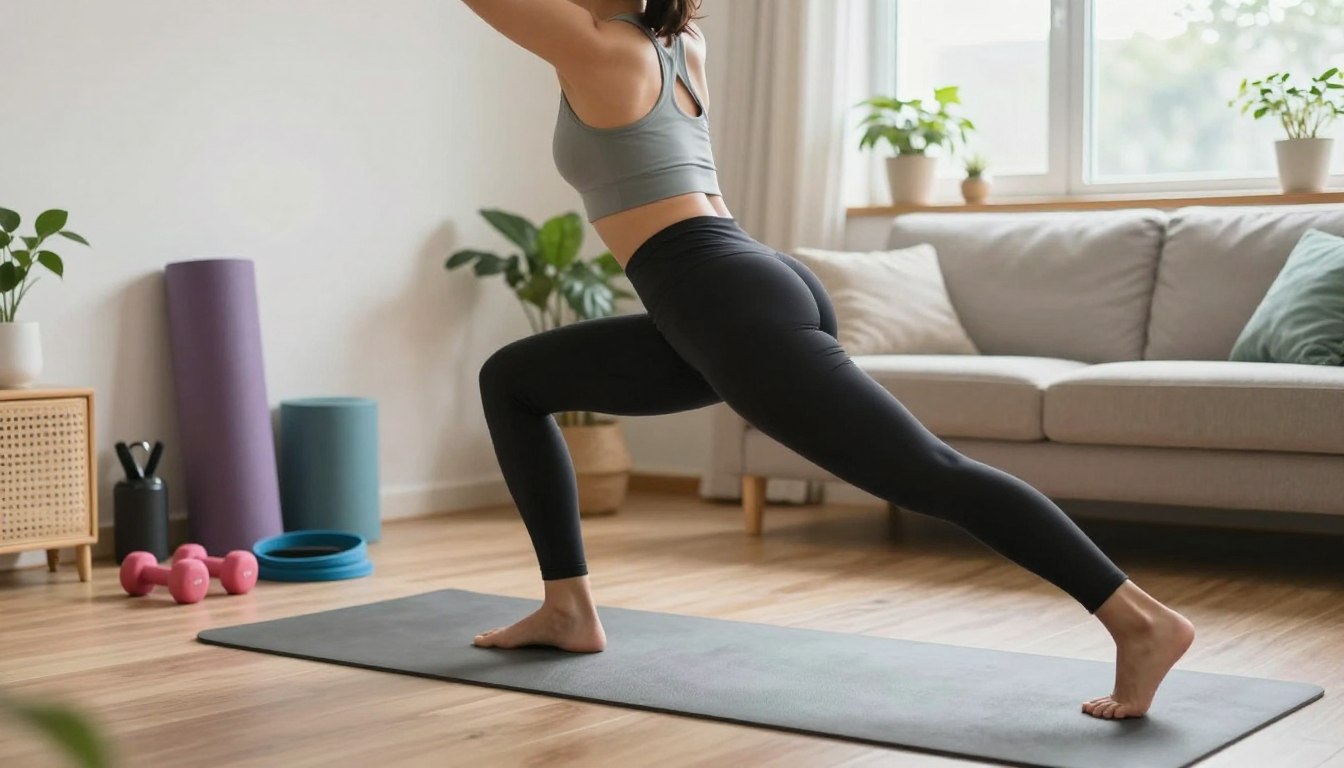
Are you tired of spending hours at the gym without seeing the results you want? Can you really burn fat without stepping foot in a fitness center? The answer is yes, and it’s easier than you think.
Effective home workouts can be just as efficient as gym sessions. With the right routine, you can achieve your fat loss goals from the comfort of your own home.
Our article will guide you through the most effective exercises and routines to help you get started on your fitness journey.
Key Takeaways
- Discover the most effective home exercises for burning fat.
- Learn how to create a workout routine that suits your lifestyle.
- Understand the benefits of exercising at home for weight loss.
- Get tips on how to stay motivated and track your progress.
- Explore the convenience and flexibility of home workouts.
Understanding Fat Loss and How Home Workouts Help
Understanding the science behind fat loss is crucial, and home workouts offer a convenient and effective way to burn fat. Fat loss occurs when the body burns more calories than it consumes, a process influenced by factors such as metabolism, diet, and exercise.
The Science of Fat Loss
At its core, fat loss is about creating a calorie deficit. This can be achieved through a combination of reducing caloric intake and increasing physical activity. Exercise, particularly when done regularly and with intensity, can significantly enhance this process by building muscle mass, which in turn boosts resting metabolic rate.
Effective home exercises play a crucial role in this process. They not only burn calories during the activity but can also contribute to increased metabolism post-exercise, a phenomenon known as excess post-exercise oxygen consumption (EPOC).
Benefits of Working Out at Home
Working out at home offers numerous benefits, including convenience, privacy, and cost-effectiveness. It eliminates the need to commute to a gym, allowing for more flexible scheduling and comfort. Moreover, home workouts can be just as effective as gym workouts if done correctly and consistently.
To burn fat at home, one doesn’t necessarily need expensive equipment. Bodyweight exercises, such as push-ups, squats, and lunges, are highly effective. Additionally, incorporating high-intensity interval training (HIIT) can significantly enhance fat loss.
Equipment Options for Home Fitness
While bodyweight exercises are sufficient for many, some individuals may prefer or benefit from additional equipment. Options range from minimal investments like resistance bands or jump ropes to more significant expenditures such as home gym systems or treadmills.
| Equipment | Cost | Benefits |
|---|---|---|
| Resistance Bands | $10-$30 | Portable, versatile, and great for strength training |
| Jump Rope | $5-$20 | Excellent for cardio, improves coordination |
| Home Gym System | $100-$1000+ | Comprehensive, allows for a variety of exercises |
Choosing the right equipment depends on personal fitness goals, available space, and budget. It’s also worth considering digital fitness platforms that offer a range of workouts that can be done at home with minimal or no equipment.
Effective Home Workouts for Fat Loss
Effective home workouts can be a game-changer for those looking to lose fat and improve overall fitness. With the right strategies, you can achieve significant fat loss without stepping foot in a gym.
High-Intensity Interval Training (HIIT)
HIIT involves short bursts of intense exercise followed by brief periods of rest. This type of training is highly effective for fat loss because it boosts your metabolism and burns calories long after the workout is completed.
Benefits of HIIT:
- Increased metabolism
- Improved cardiovascular health
- Enhanced fat burning
20-Minute HIIT Routine
A simple yet effective 20-minute HIIT routine can be done at home with little to no equipment. Here’s an example:
- Warm-up: 2 minutes of jumping jacks
- Burpees: 30 seconds
- Rest: 30 seconds
- Mountain climbers: 30 seconds
- Rest: 30 seconds
- Repeat the cycle for 15 minutes
- Cool-down: 3 minutes of stretching
Bodyweight Circuit Training
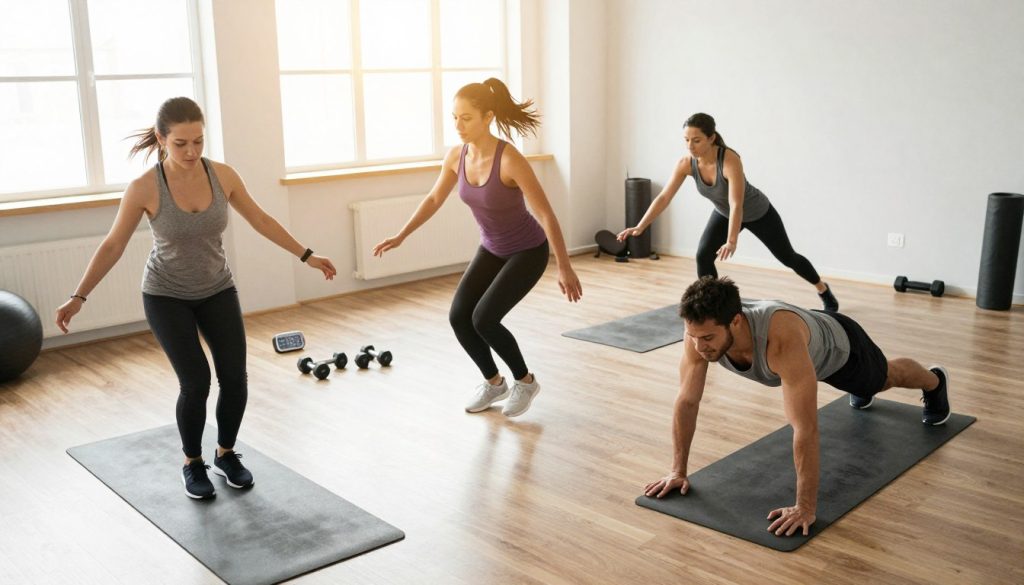
Bodyweight circuit training involves performing a series of exercises in succession with minimal rest in between. This type of training is excellent for building strength and burning fat.
Example Exercises:
- Push-ups
- Squats
- Lunges
- Planks
Full-Body Circuit Workout
Here’s a full-body circuit workout you can do at home:
- Perform 10 push-ups
- Followed by 15 squats
- Then 10 lunges per leg
- Finish with a 30-second plank
- Rest for 1 minute, then repeat the circuit 2-3 times
Tabata-Style Workouts
Tabata is a form of HIIT that involves 20 seconds of all-out effort followed by 10 seconds of rest, repeated for 4 minutes. This protocol can be applied to various exercises.
Benefits of Tabata:
- Improved anaerobic capacity
- Enhanced fat loss
- Increased mental toughness
4-Minute Tabata Workout Examples
Here are a few exercises you can use for a Tabata workout:
- Sprints
- Burpees
- Jump squats
- Mountain climbers
For example, sprint in place for 20 seconds, rest for 10 seconds, and repeat for 4 minutes.
By incorporating these effective home workout strategies into your routine, you can achieve significant fat loss and improve your overall fitness.
Best Fat-Burning Exercises You Can Do Anywhere
When it comes to fat loss, the right exercises can make all the difference, and the best part is you can do them anywhere. Incorporating a mix of exercises that target different muscle groups is key to an effective fat-burning routine.
Upper Body Exercises
Upper body exercises are crucial for overall fitness and can be done with minimal equipment. Some effective upper body exercises include:
- Push-ups: A classic exercise that targets the chest, shoulders, and triceps.
- Dumbbell rows: Works the back and biceps.
- Incline push-ups: Targets the upper chest.
Lower Body Fat-Burning Moves
Lower body exercises are essential for building strength and burning fat. Some effective lower body exercises include:
- Squats: Works the legs and glutes.
- Lunges: Targets the legs and improves balance.
- Calf raises: Strengthens the calf muscles.
Core-Strengthening Exercises
A strong core is vital for overall fitness and stability. Some effective core-strengthening exercises include:
- Planks: Strengthens the core and improves posture.
- Russian twists: Targets the obliques.
- Leg raises: Works the lower abs.
Full-Body Compound Movements
Full-body exercises are great for burning fat and improving overall fitness. Some effective full-body compound movements include:
- Burpees: A full-body exercise that combines strength and cardio.
- Mountain climbers: Targets the entire body and improves agility.
- Squat thrusters: Works the legs, glutes, and core.
| Exercise | Muscle Group | Equipment Needed |
|---|---|---|
| Push-ups | Chest, Shoulders, Triceps | None |
| Squats | Legs, Glutes | None |
| Burpees | Full Body | None |
Creating Your Home Workouts for Fat Loss Plan
A well-structured home workout plan is the cornerstone of successful fat loss. To achieve your goals, it’s crucial to design a plan that is both effective and sustainable.
When creating your home workout plan, several key factors come into play. First, you need to design a weekly schedule that fits your lifestyle and ensures consistency.
Designing a Weekly Schedule
To design an effective weekly schedule, start by determining how many days you can dedicate to working out. For most people, 3-4 days per week is a good starting point.
- Begin with shorter sessions (20-30 minutes) and gradually increase the duration as you build endurance.
- Mix and match different types of workouts, such as HIIT, bodyweight circuit training, and strength training, to keep things interesting and prevent plateaus.
- Ensure you have rest days in between to allow your muscles to recover.
For example, a sample weekly schedule might look like this:
| Day | Workout Type | Duration |
|---|---|---|
| Monday | HIIT | 30 minutes |
| Tuesday | Bodyweight Circuit | 25 minutes |
| Wednesday | Rest | – |
| Thursday | Strength Training | 35 minutes |
| Friday | HIIT | 30 minutes |
Progressive Overload Techniques
To continue making progress, you need to challenge your muscles progressively. This can be achieved through:
- Increasing the number of repetitions or sets over time.
- Decreasing rest time between exercises.
- Increasing the difficulty of exercises (e.g., progressing from push-ups to diamond push-ups).
“Progress is made when you challenge yourself beyond your comfort zone.”
Tracking Your Progress
Tracking your progress is vital for staying motivated and adjusting your workout plan as needed. Use a workout log or a fitness app to monitor your workouts, weight, and body measurements.
Common Mistakes to Avoid
Avoid common pitfalls such as:
- Not warming up properly before workouts.
- Neglecting to stretch after workouts.
- Not listening to your body and overtraining.
By being aware of these potential mistakes, you can take steps to prevent them and ensure a successful fat loss journey.
Conclusion: Making Home Workouts a Sustainable Habit
Maintaining a consistent home workout routine can be challenging, but with the right mindset and strategies, it can become a sustainable habit. One of the primary home workout challenges is staying motivated and avoiding plateaus. To overcome this, it’s essential to mix up your routine and incorporate new exercises and techniques.
Creating a schedule and tracking your progress can also help you stay on track. Additionally, finding a workout buddy or accountability partner can provide an added motivation to continue your fitness journey. By committing to regular home workouts, you can achieve your fat loss goals and enjoy the long-term benefits of a healthier lifestyle.
Overcoming home workout challenges requires persistence, patience, and creativity. By incorporating the strategies outlined in this article, you can make home workouts a sustainable habit and achieve lasting results.
Leave a Reply